
If you are wondering how to start a video podcast, the honest answer is that it is simpler than it looks. You need one clear topic, a camera that stays steady, a mic that sounds clean and a plan for episode one. This guide is written for video podcast beginners in India, from first-timers asking podcast kaise shuru kare to business owners in Jaipur who want to talk to their customers on camera.
We run Oskillo Studio in Vaishali Nagar, and a worry we hear often from beginners is: “Do I need to buy everything first?” You do not. Let us go step by step.
Key takeaways
- On YouTube every podcast episode is a video, so you start a YouTube podcast by recording video, not by uploading an MP3.
- Audio quality matters more than camera quality. Spend on the mic before the camera.
- Pick a narrow niche and a simple format. Short 10-15 minute episodes are a safe start.
- Plan for partial viewing: most people find episodes through search or recommendations, not at minute one.
- Clips for Shorts and Reels bring in new viewers. Plan them before you record.
- Move to a studio when your room, time or guests start holding the show back.
Why start a video podcast on YouTube now?
Because people have started watching podcasts, not only listening to them. YouTube’s own blog says India’s podcasting is shifting from audio-only formats to visual-first “podshows”. If you start on video, one recording can feed YouTube, Shorts, Reels and audio apps.
The bigger picture supports this. YouTube reported that viewers watched over 700 million hours of podcasts on living room devices in October 2025, up from 400 million a year earlier (YouTube blog). That is a global number, not an India one, but the direction is clear. Outlook Business also describes YouTube moving into long-form programming and connected TV, which is the same screen your podcast can land on.
India-specific viewing numbers are harder to find, so treat the global figures above as a direction, not a forecast for your own channel.
How to start a video podcast: the 6-step plan
You start a video podcast in six steps: choose a topic, choose a format, set up basic gear, record a test, publish on YouTube as a podcast, and cut clips. Do them in this order and you will not waste money on gear you do not need.
- Choose your topic and audience. Write one sentence: “This show helps ___ to ___.”
- Choose a format and episode length. Interview, solo or co-hosted (see the table below).
- Set up camera, mic and light. Keep it basic. A phone on a tripod is a valid start.
- Record a test episode. Watch it with headphones. Fix what you hear, not what you imagine.
- Publish as a YouTube podcast. Create a playlist, mark it as a podcast and add a square thumbnail.
- Cut clips for Shorts and Reels. Three to five clips per episode is a workable target.
If you also want audio platforms, the RSS route explained below covers that side.
How do you choose a video podcast format and niche?
Choose the format you can repeat every week without burning out, and a niche narrow enough that a stranger knows in five seconds what the show is about. A narrow niche is easier to stand out in, as podcast vendor guides such as Recast point out.
| Video podcast format | Best for | What you need |
|---|---|---|
| Solo talk | Experts, teachers, business owners | One mic, one camera, a script outline |
| Host + guest interview | Building a network and reach | Two mics, two angles, a question flow |
| Co-hosted conversation | Friends, opinion and culture shows | Two mics, wide shot plus close-ups |
| Panel discussion | Industry debates, local issues | 3-4 mics, multiple cameras, a moderator |
| Story / Q&A | Hindi storytelling, FAQs from customers | One steady shot, good audio |
Keep early episodes short. Guides like Talks.co suggest around 10-15 minutes to begin. Also design every episode for partial viewing, because most viewers arrive via search or recommendations, not at the start (Riverside). That means saying the topic clearly in the first minute and using short chapters.
For a Jaipur angle, think local and specific: a jeweller explaining how to check gemstones, a CA breaking down GST notices in Hindi, or a heritage guide telling the story behind a haveli. Specific beats general every time.
What is the simplest YouTube podcast setup?
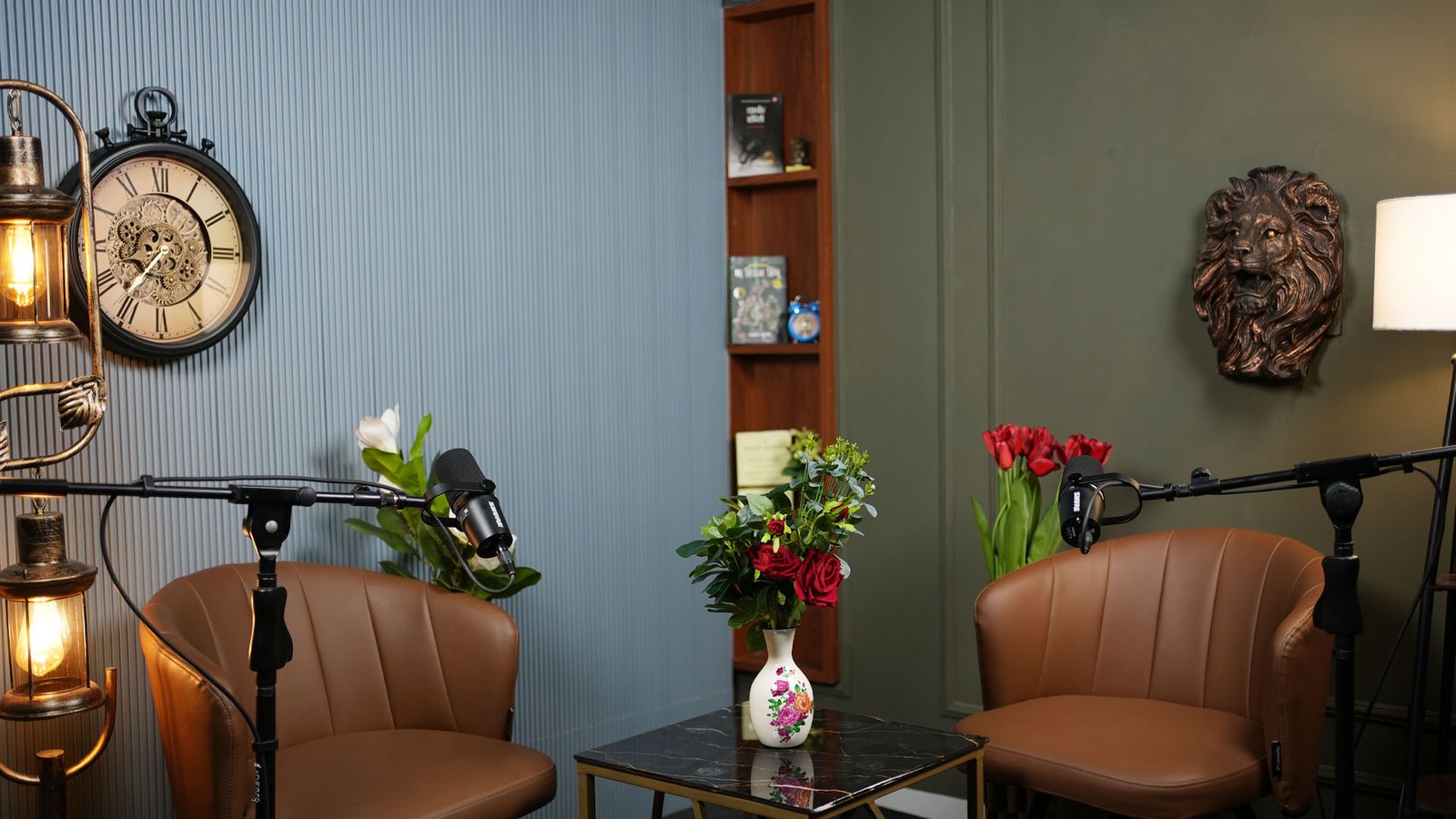
The simplest YouTube podcast setup is one camera (even a phone), one decent mic close to the speaker and one soft light in front of you. Audio quality matters more than video quality, so if you can only upgrade one thing, upgrade the mic.
Camera
Start with the phone you already have, placed on a tripod at eye level, shooting horizontally. Keep the lens clean and the phone steady, and record in a quiet room. Later, a mirrorless body gives you a softer background. In our studio we shoot with Sony A7 IV and Sony A7C bodies, but you do not need those on day one.
Microphone
A USB mic is the easiest start. XLR gives more control later, but it needs an interface or recorder. A mic like the Shure MV7X XLR mic works with a recorder such as the Zoom PodTrak P8 recorder, which is what our Economy Class rooms are built around (with a Shure MV7+). A Kadence NK93 boom mic stand keeps the mic near your mouth and off the table, which cuts desk thumps.
Light
Face a window, or use one soft light in front and slightly to the side. A Godox SB-GUE80 octagon softbox is one option when daylight is not enough.
Fix your room first
Indian homes bring their own problems. Switch off the ceiling fan and AC while recording, close windows against traffic, and avoid recording when a generator or inverter is running. In a bare flat, echo is the enemy: carpets, curtains, a sofa and bookshelves soak it up. Always record with headphones on so you catch noise early.
First episode checklist: setup, recording and editing
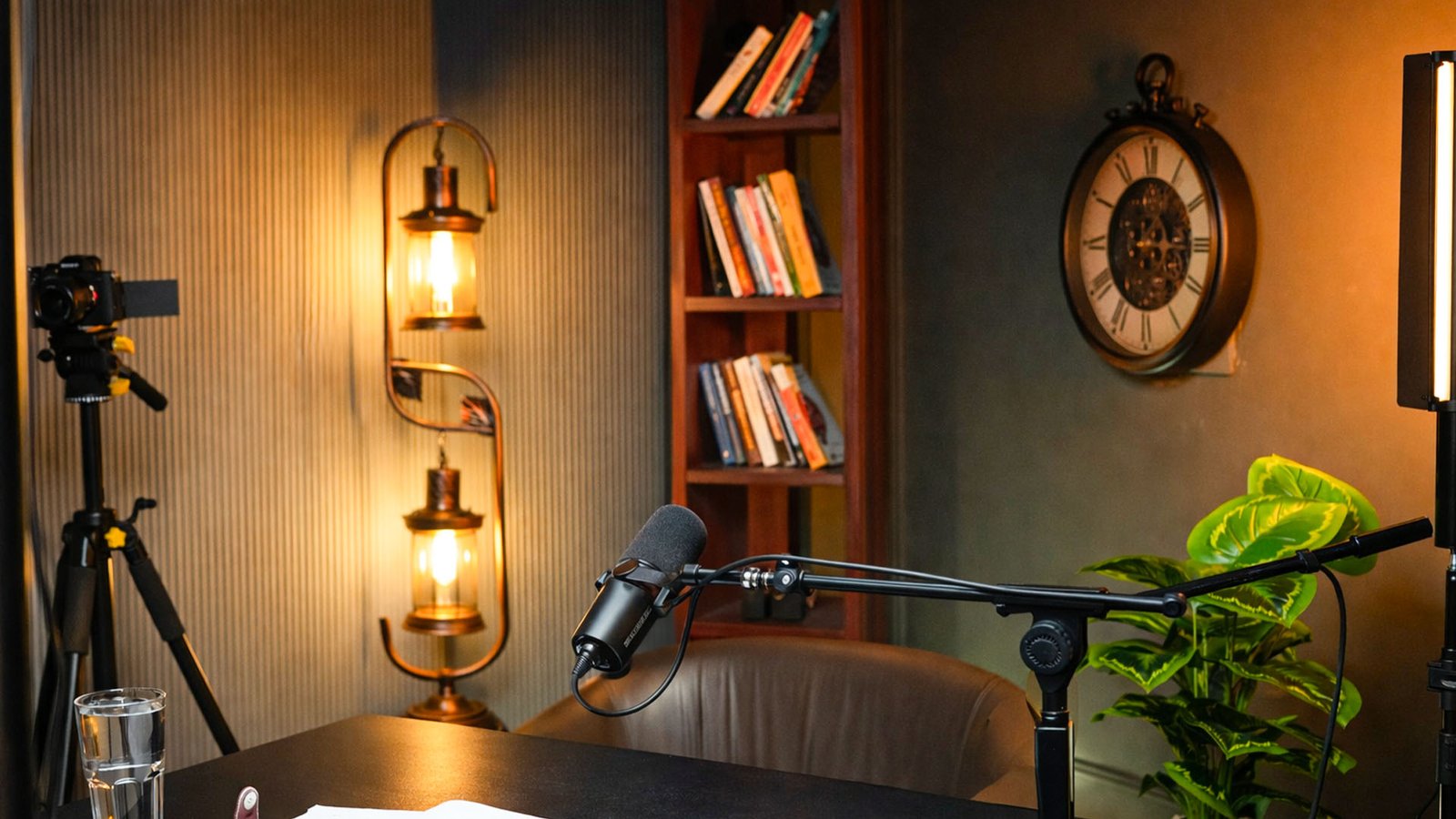
For a first 15-minute episode, plan about one hour to set up, one hour to record (including retakes) and two to four hours to edit if you do it yourself. Keep episode one simple: one topic, one take, no fancy graphics. Finished beats perfect.
- Write 5-7 questions or talking points. Put the main promise of the episode in the first minute.
- Set up the camera at eye level. Check that the frame is steady, the background is tidy and nothing bright sits behind your head.
- Place the mic 10-15 cm from your mouth. Put on headphones and say a few lines.
- Switch off fans, AC and phone notifications. Tell the family or office not to knock for an hour.
- Record a 30-second test. Play it back for sound and framing before you start the real take.
- Record the episode. If you stumble, pause, then repeat the sentence. It is easy to cut later.
- Edit. Trim silences and mistakes, balance the audio, add a title card and make a square thumbnail.
- Publish. In YouTube Studio, go to Content, then Playlists, and choose “Set as podcast” on your playlist. Add a square thumbnail (YouTube Help, YouTube Creators).
If you also plan to send the show to audio apps through RSS, RSS.com says cover art should be between 1400×1400 and 3000×3000 pixels. A YouTube podcast playlist and an RSS feed are two different routes, so choose one to begin with.
| Stage | Rough time (15-minute episode) |
|---|---|
| Planning and questions | 30-45 minutes |
| Setup and test | 30-60 minutes |
| Recording | 45-60 minutes |
| Editing and thumbnail | 2-4 hours for a beginner |
How do you start a YouTube podcast in Hindi?
You start a Hindi YouTube podcast exactly like an English one: pick a narrow topic, record clean audio on video and publish it as a podcast playlist. The difference is in how you write titles, descriptions and captions, because Hindi viewers search in Devanagari and in Roman Hindi.
- Titles: Use plain words the viewer would type, such as “Podcast kaise shuru kare? Pehla episode, 5 galtiyan”. Put the main phrase early and keep it short.
- Description: Write two or three lines in Hindi, then repeat the key phrase in Roman script. Add chapter timestamps so people can jump to their question.
- Captions: Add Hindi subtitles. Many people watch on mute, and clear captions help with mixed Hindi-English speech too.
- Language: Speak the way your audience talks. If your customers mix Hindi and English, do the same.
In Jaipur, local topics travel well in Hindi: Rajasthani food and business stories, wedding planning tips, handicraft and jewellery trade, or heritage tales told in a conversational way.
How do you cut Shorts and Reels clips from one episode?
Pick 3-5 moments from the episode where one idea is complete, reframe them vertically, open with the strongest line and add subtitles. One 15-minute conversation can easily give you a week of short clips if you plan for them while recording.
- Mark moments while you record. Note the timestamp whenever a guest says something sharp, funny or surprising.
- Hook in the first 3 seconds. Start with the punchiest sentence, not “Hello, welcome back”.
- Frame for vertical. Keep faces in the middle of the frame so a 9:16 crop does not cut anyone off.
- Add subtitles in large, readable text.
- Add a cover and a one-line caption. Link back to the full episode.
Recording with two cameras gives you a close-up for every speaker, which makes vertical cuts much easier. YouTube has noted growth at both ends of the spectrum, with creators using short clips and hour-long episodes side by side (Beet.tv).
When should you move from a home setup to a studio?
Move to a studio when your room, time or guests are holding the show back: constant noise, echo you cannot fix, guests who will not come to your home, or editing that eats your week. A studio is not a starting requirement. It is an upgrade when the show is ready for it.
| Question | Home setup | Studio |
|---|---|---|
| Upfront cost | You buy mic, camera, light and stand | You pay per hour only |
| Sound | Depends on your room | Treated room, pro mics |
| Guests | They come to you | Neutral, professional place |
| Setup time | Every episode, by you | Ready when you arrive |
A simple break-even test: add up what you would spend on gear, then divide by the hourly rate. At Oskillo, four one-hour Economy Advance sessions a month come to Rs 16,000. If you record only once or twice a month, hiring is usually cheaper than buying. If you record every day, owning gear starts to make sense.
At Oskillo: how we help beginners
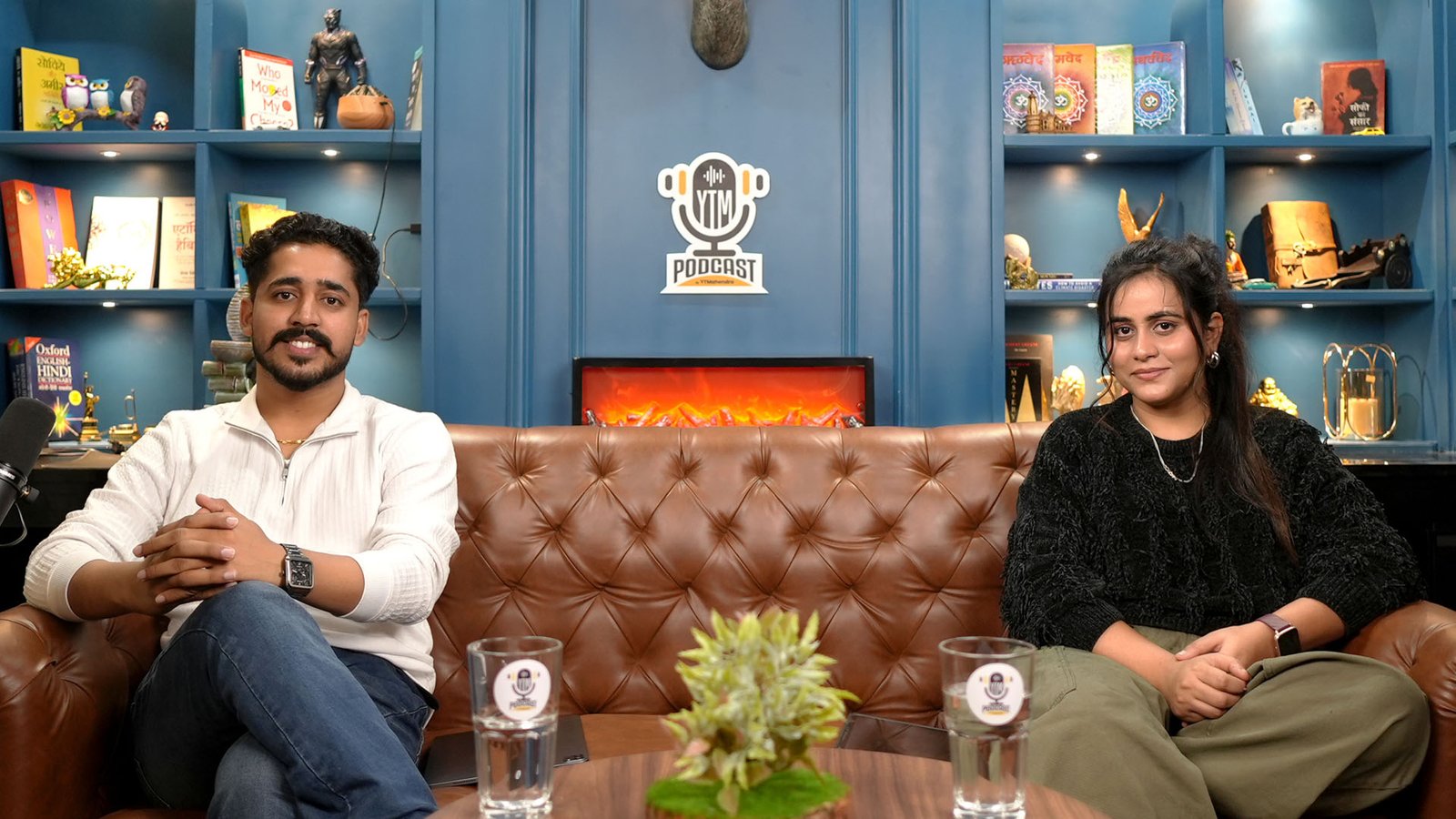
Oskillo Studio in Vaishali Nagar, Jaipur is open every day from 10 AM to 8 PM, and booking in advance is recommended. We have soundproof, acoustically treated rooms and several themed sets, including the Blue Theme, a classic wooden library, a green wall and a grey vintage set. Our founders are present at every shoot to guide you, so beginners are never left to figure out the gear alone.
Economy Class Advance costs Rs 4,000 per hour and includes 2 Sony 4K cameras, a Shure mic, a recorder, lights and a technician. Economy Basic is Rs 2,000 per hour for space and lights only. You can see every option on our podcast studio pricing in Jaipur page or read about studio rental.
For editing, a reel edit costs Rs 1,500, a podcast edit Rs 3,000 and a thumbnail Rs 500. The Complete Podcast Edit at Rs 10,000 covers the main edit, a highlight, 3 reels with covers and 2 thumbnails. We also edit remotely for clients outside Jaipur. To plan your first shoot, contact us or message us on WhatsApp.
Some product links on this page are Amazon affiliate links. As an Amazon Associate, YTMahendra Podcast earns from qualifying purchases, at no extra cost to you.
Frequently asked questions
How do I start a video podcast on YouTube with no experience?
Pick one narrow topic, choose a simple format like a solo talk or interview, and record a short 10-15 minute test with a phone on a tripod and a clean mic. Upload it to a YouTube playlist, mark the playlist as a podcast, then cut clips for Shorts and Reels.
Can I start a YouTube podcast with just a phone?
Yes. A phone on a tripod at eye level, in a quiet room with soft light, is enough for early episodes. Add a mic as soon as you can, because viewers forgive average video but not poor sound. Upgrade the camera only after your format is working.
Do I need a studio to start a podcast?
No. You can start at home with a phone, a mic and a quiet room. A studio helps when you need better sound, a proper set, multiple cameras or guests who must be hosted professionally. Many creators start at home and book studio hours for key episodes.
How long should a first podcast episode be?
Around 10-15 minutes is a comfortable first episode. It is easier to plan, record and edit, and it lets you test your format before committing to long conversations. Once your audience grows, you can extend episodes to 30-60 minutes or more.
What equipment do I need for a video podcast?
At minimum: a camera or phone, a tripod, one microphone per speaker, headphones and a soft light source. Audio matters most. For more control later, add an XLR mic with a recorder or interface, a mic stand, and a second camera for guest shots.
How much does it cost to start a video podcast in India?
A phone-only start costs almost nothing. A basic home kit adds a mic, tripod and light. If you rent instead, Oskillo Studio in Vaishali Nagar, Jaipur charges Rs 2,000 per hour for Economy Class Basic and Rs 4,000 per hour for Economy Advance with cameras, mics and a technician.
Hindi mein podcast kaise shuru kare?
Pehle ek clear topic aur Hindi audience chuniye, phir simple format aur short episode plan kijiye. Phone ya camera, mic aur light se record karein, Hindi ya Hinglish title aur description likhkar YouTube par upload karein, aur clips Shorts aur Reels par daalein.
Book your session at Oskillo Studio
Soundproof sets, 2 Sony 4K cameras, Shure mics and an on-site technician in Vaishali Nagar, Jaipur. Studio rent starts at Rs 2,000 per hour.
WhatsApp +91 96101 80066 | See all prices | 3rd Floor, VR Theme Park, Gandhi Path, Vaishali Nagar, Jaipur