


If you are searching for youtube monetization requirements 2026 india, you have probably noticed that every website quotes different numbers. One says 4,000 hours. Another says 8,000. A third talks about 10 million Shorts views. They are not all wrong. They describe different rules and different dates, and for a podcast channel the difference matters a lot.
We run Oskillo Studio in Jaipur, and we often talk to creators who want to start a video podcast and earn from it. So we went to YouTube’s own Help page first and used reputable trackers only to fill the gaps. Here is the clean version.
Key takeaways
- Until January 31, 2027, the entry bar is 1,000 subscribers plus 4,000 watch hours or 10 million Shorts views in 90 days.
- From February 1, 2027, new applicants need 8,000 watch hours or 20 million Shorts views, plus 1,000 subscribers.
- Channels already in the Partner Program are not affected by the higher entry bar, but must accept the updated terms by January 31, 2027.
- The 10 million Shorts figure is a separate, ongoing earnings floor for the Shorts pool, not the entry rule.
- Shorts-feed watch time does not count toward the 8,000 long-form hours, so podcast clips bring people in and the full episode builds the hours.
What are the YouTube monetization requirements 2026 India creators face today?
Until January 31, 2027, a new channel needs 1,000 subscribers plus either 4,000 public watch hours in the last 12 months or 10 million Shorts views in 90 days to join the YouTube Partner Program. These are the current-bar figures listed by vidIQ.
The thresholds reported for India match the global ones. What differs is how much you earn per view, which we cover later. You apply from the monetization section of YouTube Studio, and Studio shows your own progress against each threshold, so always trust that screen over any blog post, including ours.
If you are a new podcast channel today, you still have a window. A creator who reaches the current bar can apply under the lower numbers while they are still in force, though YouTube has not published what happens to applications still pending on February 1, and review time is not guaranteed. We will not guess on that point.
What is changing in the YouTube Partner Program from February 2027?
YouTube announced the overhaul on August 10, 2026, its first significant change to Partner Program entry since 2018, as Alan Spicer’s breakdown notes. From February 1, 2027, new applicants need 1,000 subscribers plus 8,000 watch hours or 20 million Shorts views.
The official numbers sit on the YouTube Help page for Partner Program eligibility. Here is how the entry bar compares:
| Item | Until Jan 31, 2027 | From Feb 1, 2027 (new applicants) |
|---|---|---|
| Subscribers | 1,000 | 1,000 |
| Public watch hours (365 days) | 4,000 | 8,000 |
| Or Shorts views (90 days) | 10 million | 20 million |
| Existing partners | Already in | Not affected by the higher bar |
Existing members also get a friendlier activity rule. From February 1, 2027, a channel counts as active if it has 1,000 qualified watch hours in 365 days, 1 million qualified Shorts views in 90 days, or 2 long-form videos or 5 Shorts every 90 days.
What 8,000 hours really means per day
Spread over a year, 8,000 hours is about 22 hours of watch time every single day, according to vidIQ’s maths as reported by Shane the Gamer. The Shorts route works out to roughly 222,222 views a day. For a small channel that is a steady climb, not a lucky week.
Why Shorts-feed time will not rescue your hours
Watch time earned inside the Shorts feed does not count toward the 8,000-hour long-form route, per vidIQ. So a podcast channel cannot reach the target by posting only clips. The long episode has to do the work, and we come back to this in the podcast section.
Why do websites show 4,000, 8,000, 10 million and 20 million?
Because four different rules are being mixed together. The 4,000 hours and 10 million Shorts views are the current entry bar. The 8,000 hours and 20 million Shorts views are the entry bar from February 2027. The 10 million figure is also a separate, ongoing Shorts earnings floor.
This is the point where most articles go wrong. vidIQ is clear that 20 million is an entry requirement and 10 million is an ongoing Shorts Creator Pool requirement. Some sites also claim existing channels must reach 8,000 hours. YouTube Help says existing partners are not affected, so we follow YouTube.
What the Shorts monetization 10 million views rule actually does
To earn from the Shorts Creator Pool in a given month, a channel needs 10 million qualified Shorts views over the last 90 days. Dropping below that does not remove you from the program or touch your long-form earnings, and Shorts revenue resumes once you are back above 10 million, as explained by Built by Foundry.
For smaller Shorts creators, YouTube is preparing Shopping bonuses, production credits for brand deals and earnings boosts for trend activations. PPC Land reports that criteria, payment levels and dates have not been published, so please do not plan your income around them yet.
Does the 500-subscriber fan-funding tier still apply?
Yes, the lower tier is unchanged. It needs 500 subscribers, three public uploads in 90 days, and either 3,000 public watch hours in 12 months or 3 million Shorts views in 90 days. YouTube says eligibility for fan funding, Creator Partnerships and Shopping is not changing, as vidIQ and Creaticalc both report.
One caution for Indian creators. We could not confirm which features of this tier are live for every channel in India, so open the monetization tab in YouTube Studio and see what it offers you. Treat 500 subscribers as an early milestone, not a replacement for ad revenue.
What should existing YouTube partners do before January 31, 2027?
Accept the updated terms, including the Commerce Product Module, in YouTube Studio before January 31, 2027. If you do not, you stop earning from the associated features from February 1, 2027, according to the YouTube Help page. Existing partners are not asked to meet the higher entry bar.
Three modules are involved: Watch Page Monetization, Shorts Monetization and, where applicable, Commerce Product, as CineD explains. Open the monetization section of YouTube Studio, read each prompt and accept what applies to you. Missing it can cost you real money. Pehle yeh kaam kar lo, baaki planning baad mein.
How much does YouTube pay in India per 1,000 views?
YouTube publishes no fixed rate, so every figure is an estimate. upGrowth estimates Indian creators keep roughly ₹25 to ₹150 per 1,000 views, with Shorts at about ₹5 to ₹30, in its India CPM guide. Niche, audience location and language change the number a lot.
| Format | Estimated creator earnings per 1,000 views (India) |
|---|---|
| Long-form video | ₹25 to ₹150 (upGrowth); other sites quote higher RPMs |
| Shorts | ₹5 to ₹30 (upGrowth) |
Long-form creators get 55% of ad revenue. The Premium Lite pool pays 55% for long-form and 45% for Shorts, per exchange4media.
For a feel of the scale, here is our own arithmetic, not a YouTube figure. At an assumed ₹50 per 1,000 views, ₹1 lakh a month needs about 20 lakh views. At ₹150 it needs roughly 6.7 lakh. That is why serious podcasters add sponsors, brand deals and services on top of ad revenue.
How can a weekly video podcast reach 8,000 watch hours?
A weekly podcast reaches 8,000 watch hours by making long episodes people actually finish, and by letting the back catalogue keep earning for a full year. With 45 to 60 minute episodes, 8,000 hours equals roughly 8,000 to 10,700 full-length views. That is our arithmetic, not a sourced figure.
Clips do not add to this number, because Shorts-feed time is excluded. Use clips to bring new viewers in, and make the full episode the destination. Here is the order we suggest:
- Record in batches so you never miss a weekly upload. A 12-episode plan gives you a quarter of content before you start promoting.
- Fix your audio first. Viewers leave a bad-sounding episode faster than a plain-looking one.
- Shoot with more than one camera angle so the edit stays lively over 50 minutes.
- Add chapters and a clear title so people find the part they came for.
- Cut three or four clips per episode and point each one to the full conversation.
How does Oskillo Studio help podcast channels prepare?
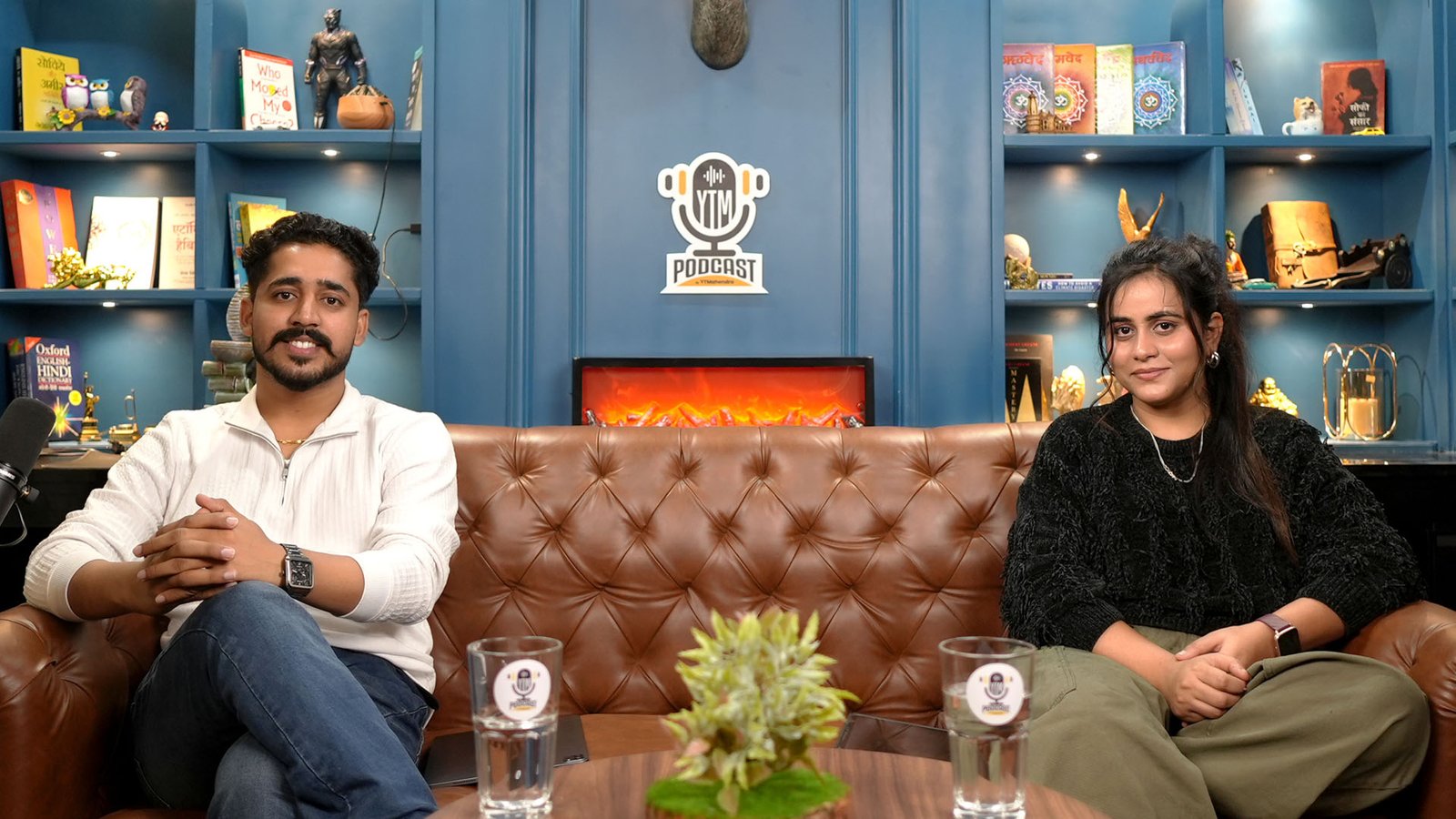
Oskillo Studio in Vaishali Nagar, Jaipur gives you a soundproof room, multicam 4K recording and editing under one roof, so a weekly schedule becomes realistic. We have delivered 100+ productions, and our founders are present at every shoot to guide you, which helps first-timers a lot.
Our process runs from concept and question flow, through mic, light and camera checks, to 4K multicam recording with live monitoring, then edit, colour, audio mastering, thumbnails, captions and reels. Business Class uses a Shure SM7B with a RODECaster Pro II console. Economy Class uses a Shure MV7+ with a Zoom PodTrak P8 recorder. If you plan a home setup, the Shure SM7B mic and RODECaster Pro II console are what we use in Business Class.
Studio rental starts at Rs 2,000 per hour for Economy Basic and Rs 4,000 for Economy Advance, which includes 2 Sony 4K cameras, Shure mic, recorder, lights and a technician. Business Class Advance is Rs 8,000 per hour. See the full podcast studio pricing in Jaipur, or read about our studio rental.
For editing, a podcast edit up to 90 minutes is Rs 3,000, and the Complete Podcast Edit at Rs 10,000 includes the main edit, a highlight, 3 reels with covers and 2 thumbnails. Clients outside Jaipur can use remote editing.
What should you do this month? A simple checklist
Check your real numbers in YouTube Studio, then decide which path you are on. Existing partners accept the new terms. New channels either apply early at the current bar or build toward the higher one with a steady upload rhythm. Follow these steps:
- Open YouTube Studio and note your subscribers, public watch hours and Shorts views against each threshold.
- If you are already a partner, accept the updated terms and the Commerce Product Module before January 31, 2027.
- If you are close to 1,000 subscribers and 4,000 hours, apply as soon as you qualify.
- If you are far away, plan a weekly long-form episode and a clip routine.
- Book a studio session, check your sound and picture on screen, and set your recording days.
Questions about a setup? Check our FAQs or message us on WhatsApp. We are open every day from 10 AM to 8 PM, and booking in advance is recommended.
Some product links on this page are Amazon affiliate links. As an Amazon Associate, YTMahendra Podcast earns from qualifying purchases, at no extra cost to you.
Frequently asked questions
How many watch hours do I need to monetize YouTube in 2027?
New applicants from February 1, 2027 need 1,000 subscribers plus 8,000 public watch hours in the past 365 days, or 20 million qualified Shorts views in the past 90 days. Until January 31, 2027, the bar remains 4,000 watch hours or 10 million Shorts views. Always confirm in your own YouTube Studio.
Kya 4,000 watch hours ab bhi kaafi hain?
Haan, January 31, 2027 tak entry bar 1,000 subscribers aur 4,000 watch hours hai. February 1, 2027 se naye applicants ko 8,000 hours chahiye. YouTube ne pending applications ka transition rule publish nahi kiya hai, isliye uspar bharosa karke der na karein.
Do existing YouTube partners need 8,000 hours?
No. YouTube Help says channels already in the Partner Program are not affected by the higher entry bar. However, existing partners must accept the Commerce Product Module in YouTube Studio by January 31, 2027, or they stop earning from the associated features from February 1, 2027.
What is the 10 million Shorts views rule?
It is an ongoing earnings floor for the Shorts Creator Pool. To earn Shorts revenue in a month, a channel needs 10 million qualified Shorts views over the last 90 days. Falling below it does not remove you from the program or affect long-form earnings.
Can I monetize with 500 subscribers in India?
YouTube’s lower fan-funding tier needs 500 subscribers, three public uploads in 90 days, and either 3,000 public watch hours in 12 months or 3 million Shorts views in 90 days. Full ad revenue still needs 1,000 subscribers. We could not verify availability for India, so check YouTube Studio.
How much does YouTube pay per 1,000 views in India?
YouTube publishes no fixed rate. Third-party estimates, such as upGrowth’s, suggest creators keep roughly ₹25 to ₹150 per 1,000 views, with Shorts at ₹5 to ₹30. Other sites quote higher figures. Treat all of these as estimates that vary by niche and audience.
Do podcast clips and Shorts count toward watch hours?
Shorts-feed watch time does not count toward the 8,000-hour long-form route. Clips still help because they bring new viewers to your full episode, and the full episode is where public watch hours build. Think of clips as discovery and the long video as the hour-earner.
How many views do I need to earn ₹1 lakh a month?
Using the estimate of ₹25 to ₹150 per 1,000 views, ₹1 lakh a month needs roughly 6.7 lakh to 40 lakh views. That is our own arithmetic on third-party estimates, not a YouTube figure. Sponsorships often add more than ad revenue for podcast channels.
Book your session at Oskillo Studio
Soundproof sets, 2 Sony 4K cameras, Shure mics and an on-site technician in Vaishali Nagar, Jaipur. Studio rent starts at Rs 2,000 per hour.
WhatsApp +91 96101 80066 | See all prices | 3rd Floor, VR Theme Park, Gandhi Path, Vaishali Nagar, Jaipur
Comments (1)
[…] could not find YouTube’s own page stating 500, so trust what your Studio shows. Our guide to YouTube monetization requirements in 2026 covers the Partner Program […]