

If you are wondering how to start a podcast in India, the honest answer is that it is easier than most people think and harder to keep going than most people think. You need a clear topic, a decent microphone, a quiet room and the patience to publish regularly. You do not need a big budget on day one. Many people search podcast kaise shuru kare and get lost in gear lists before they have even decided what the show is about. We run Oskillo Studio in Vaishali Nagar, Jaipur, and we see the same pattern with beginners. So this guide goes in the order that actually works, with real rupee numbers.
Key takeaways
- Decide your topic, language and audience before you buy anything.
- Choose audio-only or video early. It changes your gear, your room and your editing.
- You can start a podcast in India almost free with a phone and free software, but sound quality is the first thing listeners judge.
- A home setup built around a proper mic usually costs a few thousand rupees. A studio is billed per hour, so plan your session.
- Record three to five episodes before you publish the first one.
- Use a podcast host that gives you an RSS feed, then submit it to Spotify, Apple Podcasts and JioSaavn. Upload the video version to YouTube.
How to start a podcast in India: the 10 steps at a glance
Starting a podcast in India takes ten steps: choose a niche, pick audio or video, set a budget, buy or rent your gear, plan episodes, record, edit, host, publish and promote. Do them in this order and you avoid the usual waste, like buying a camera before knowing your format.
- Choose your topic, language and audience.
- Decide audio-only or video podcast.
- Set a realistic budget (phone, home or studio).
- Get your microphone, headphones, light and camera sorted.
- Pick a place to record: your room or a studio.
- Write a question flow and record three to five episodes.
- Edit audio, video, thumbnails and short clips.
- Choose a podcast host and get your RSS feed.
- Publish on Spotify, Apple Podcasts, JioSaavn and YouTube.
- Promote with clips, guests and a fixed schedule.
The sections below walk through each step. If you only want the short version, jump to the checklist at the end.
Step 1: Choose your topic, language and audience
Your first decision is not the microphone. It is who the show is for, what they will learn or enjoy, and which language you will speak. A narrow topic in a language you are fluent in beats a broad show in a language you are not comfortable with.
The audience is there. IBEF reports that India had 105 million podcast listeners in 2024, with 2025 projected to cross 200 million. YouGov found that 54% of Indian consumers listen to at least an hour of podcasts a week. Listener counts differ from one report to another, so treat them as direction, not a promise.
Questions to answer before you record
- Who is one specific listener? A CA explaining tax to small shop owners is clearer than “business talk”.
- Which language? Platforms are investing in Hindi, Marathi, Tamil and Bengali content, and regional shows have room to grow.
- Solo, interview or panel? Interviews bring new audiences through guests. Solo is easiest to schedule.
- How often can you publish? Weekly for six months beats daily for two weeks.
If you are in Rajasthan, Hindi and local-language niches may still have room, so check what already exists before you fix your topic.
Step 2: Audio-only or video? How to start a video podcast
To start a video podcast, you need everything an audio show needs plus at least one camera, proper lighting and a set that looks good on screen. Video is harder to produce but gives you YouTube discovery, Reels, Shorts and clips that carry your show beyond podcast apps.
YouTube is now a serious podcast platform. The company says viewers watched over 700 million hours of podcasts on living-room devices in October 2025, up from 400 million a year earlier. That is a global figure, not India-only, but it explains why so many Indian shows record on camera.
| Question | Audio-only | Video podcast |
|---|---|---|
| Gear | Mic, headphones, recorder or laptop | Mics plus 1-3 cameras, lights, tripod |
| Room | Quiet and echo-free | Quiet, plus a clean, well-lit background |
| Editing time | Lower | Higher: camera angles, colour, captions |
| Where it grows | Spotify, Apple, JioSaavn | YouTube, Reels, Shorts, plus audio apps |
| Good for | Commuters, story and talk shows | Interviews, personal brands, business shows |
Our advice: if you plan to have guests and you are comfortable on camera, record video from episode one. You can always publish the audio too. Going the other way, adding video later, means redoing your set and your habits.
Step 3: How much does it cost to start a podcast in India?
You can start a podcast in India for close to zero rupees with a phone and free apps, spend a few thousand on a home mic setup, or rent a studio from Rs 2,000 per hour at Oskillo Studio in Jaipur. The right tier depends on whether you want audio or video, and whether you have guests.
| Tier | What you use | Approximate cost | Best for |
|---|---|---|---|
| Phone only | Phone, wired earphones with mic, a quiet room, free software like Audacity or GarageBand | Close to Rs 0 if you already own the phone and earphones | Testing your idea, solo audio |
| Home setup | USB condenser mic (about Rs 3,000-8,000 according to this AAFT guide), closed-back headphones, stand, free editing software | About Rs 3,000-8,000 for the mic, plus headphones and a stand | Regular solo or remote-interview audio |
| Studio rental | Treated room, mics, cameras, lights, technician (Advance packs) | Rs 2,000 to Rs 8,000 per hour, depending on class | Video, in-person guests, polished sound |
The studio numbers above are Oskillo Studio’s per-hour rates: Economy Class Basic Rs 2,000, Economy Advance Rs 4,000, Business Class Basic Rs 4,000 and Business Class Advance Rs 8,000. Basic is the space with basic lights, without camera or mic. Advance adds the cameras, Shure mics, recorder and a technician. See the full podcast studio pricing in Jaipur before you plan a budget.
Can you start a podcast in India for free?
Yes. Record on your phone, edit in a free app and host on Spotify for Creators, which lets you host and distribute a podcast for free. The catch is quality. Free is fine for testing the idea, but if listeners hear echo or fan noise in the first minute, they leave. So spend your first rupees on sound, not on fancy extras.
Step 4: Equipment for a video podcast setup in India
A basic video podcast setup in India needs a microphone per speaker, closed-back headphones, one or two cameras, soft lighting and a quiet room. Sound matters more than picture. Viewers forgive an average camera, but they rarely forgive bad audio.
Microphones: the best mic for a podcast in India under Rs 5,000
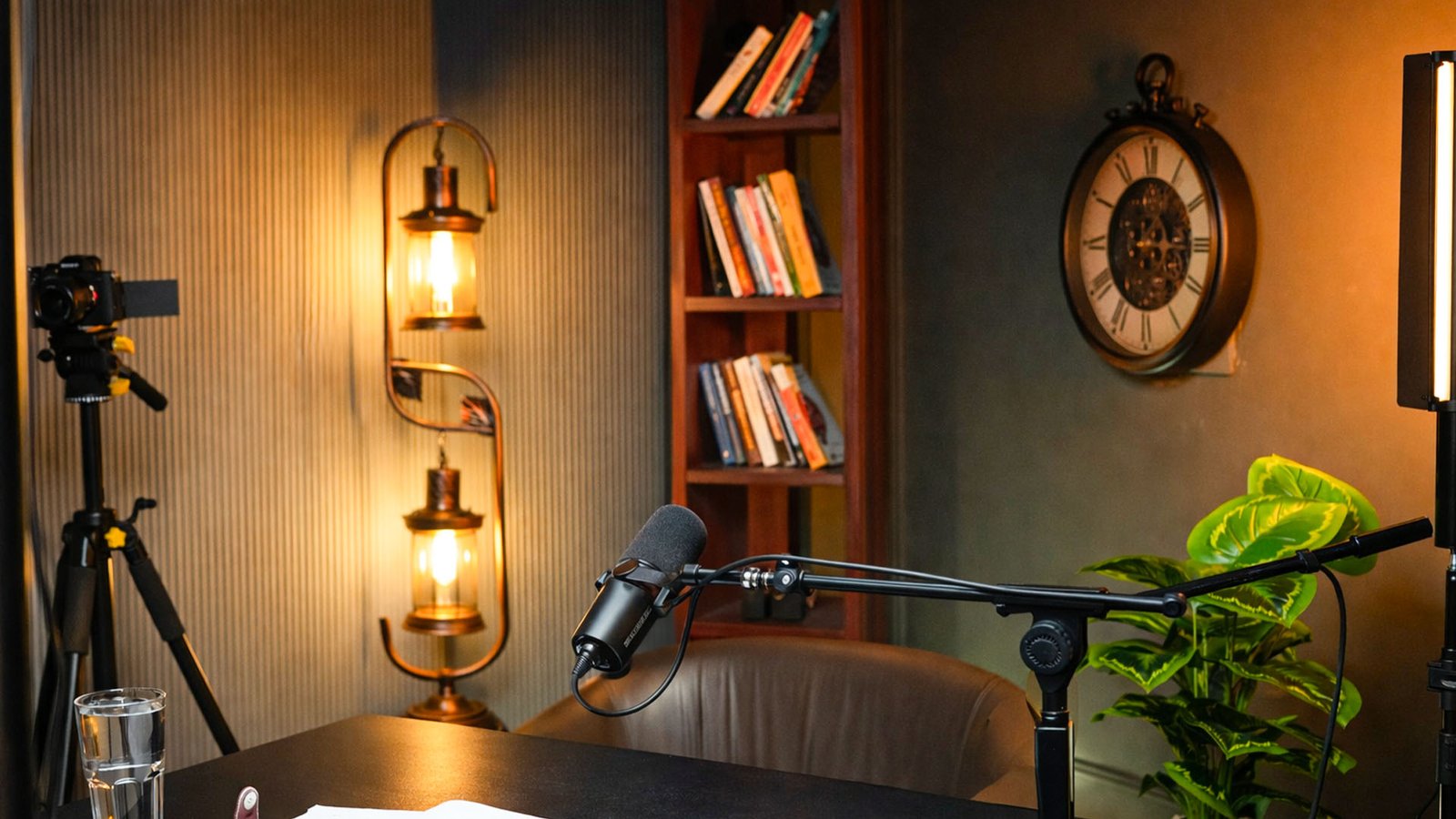
If your budget is under Rs 5,000, look at USB microphones at the lower end of the Rs 3,000-8,000 range and always test in your own room. A USB mic plugs straight into a laptop, so you skip extra boxes. When you move up, XLR mics give better control. We use a Shure SM7B with a RODECaster Pro II console in Business Class and a Shure MV7+ with a Zoom PodTrak P8 recorder in Economy Class. For a home build, the Shure MV7X XLR mic and the Zoom PodTrak P8 recorder are a sensible pair, and a Kadence NK93 boom mic stand keeps the mic at mouth level. These are affiliate links from our own gear list.
Cameras and lenses
One camera at eye level works for a solo show. For two people, two cameras let you cut between faces. On our show we use Sony A7 IV and Sony A7C bodies with 85mm F1.4, 35mm F1.8 and 15mm F1.4 lenses. A good phone with a tripod is a fair start, as long as you lock exposure and film in landscape.
Lighting
Put your main light in front of the speaker, slightly to one side, and keep it soft. A softbox like the Godox SB-GUE80 octagon softbox is a simple way to get flattering light. At the studio we use two main lights, two LC lights and two lamp lights, so both the speaker and the set are properly lit.
The room matters more than the gear
Echo, AC noise and street sound ruin more first episodes than cheap microphones do. Switch off the fan and AC while recording, close windows, and add soft furnishings like curtains, sofas and rugs. Hard bare walls make a room sound like a bathroom. If you cannot fix your room, that is the main reason to rent a treated space, which we cover next.
Step 5: Do you need a studio? What a first session looks like at Oskillo
You do not need a studio to start a podcast, but you do need a quiet, echo-free space and clean sound. A studio makes sense when you want video, in-person guests or a polished look from episode one. If you are searching for a podcast studio on rent near you in Jaipur, Oskillo Studio in Vaishali Nagar rents treated rooms by the hour, with or without editing.
Home recording works well for solo audio shows and remote interviews. It struggles when you need a good-looking background, two or three cameras, or a room that blocks street and AC noise. Many people start at home, then book a studio for guest episodes or for a batch of episodes in one go.
What a first session looks like at Oskillo
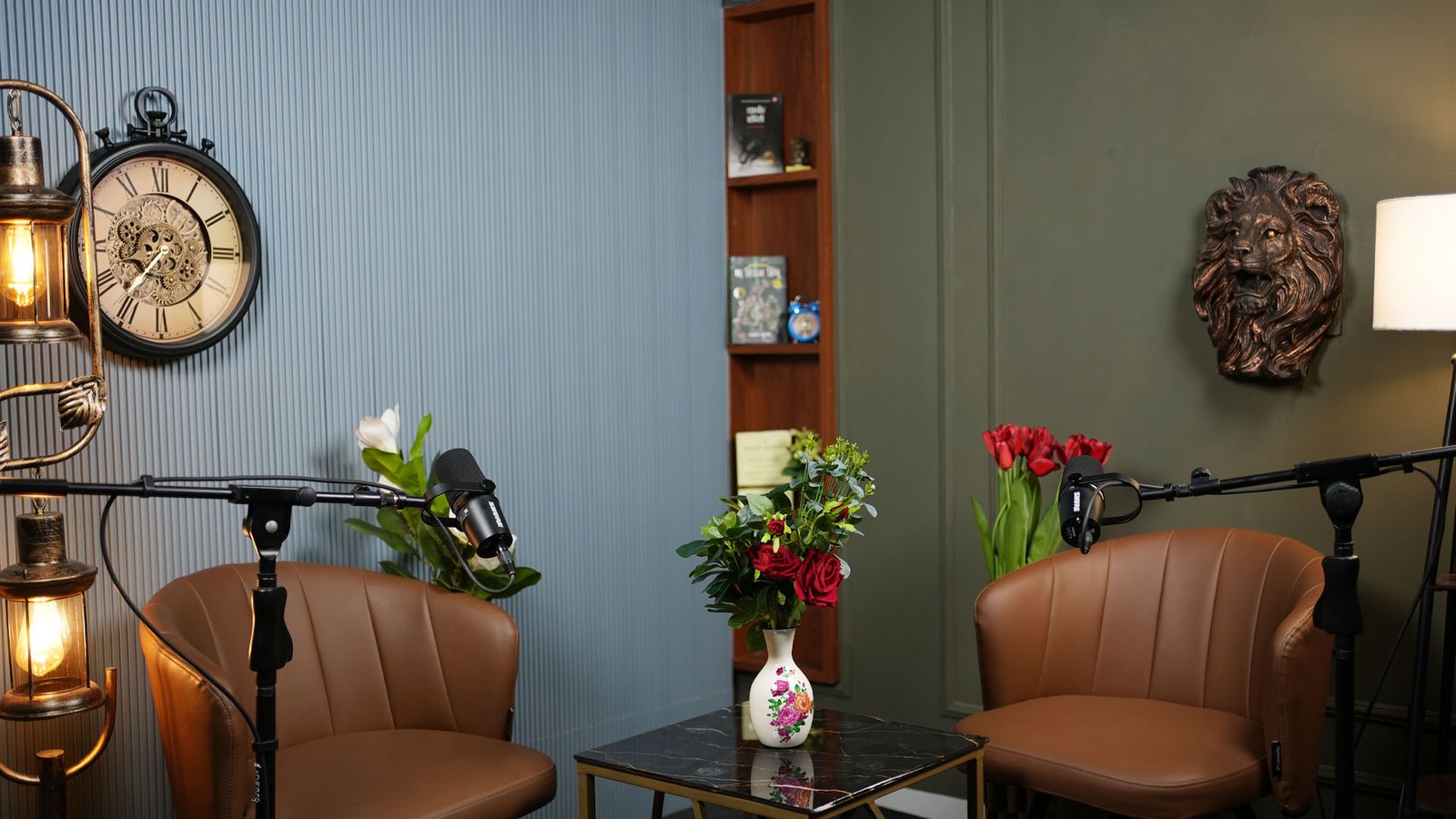
Oskillo Studio’s soundproof, acoustically treated rooms come with multiple themed sets: Blue Theme, classic wooden library, green wall, grey vintage, office, RGB gaming and Ultra Luxury. We also have a green screen and a makeup and dressing room. Here is how a typical first booking runs.
- Concept and strategy. You tell us your topic, language, guests and whether you want audio, video or both. We help you pick a set and a pack.
- Pre-production. We go through your question flow, set up the chosen set, and check mics, lights and cameras before the guest walks in.
- Production. We record in 4K with multiple cameras, monitor the sound and picture live, and guide you on the spot. Our founders are present at every shoot.
- Post-production. If you want it, we handle the edit, colour, audio mastering, thumbnails, captions, reels and platform exports.
Beginners are welcome. If you have never sat in front of a mic, we will tell you where to look, how far to sit and when to pause. The studio is open every day from 10 AM to 8 PM, and we recommend booking in advance. There is a comfortable waiting area, a clean washroom, high-speed Wi-Fi, charging points, secure parking, and tea and coffee. Rates are on our podcast studio pricing in Jaipur page, and you can see how renting works on our studio rental page.
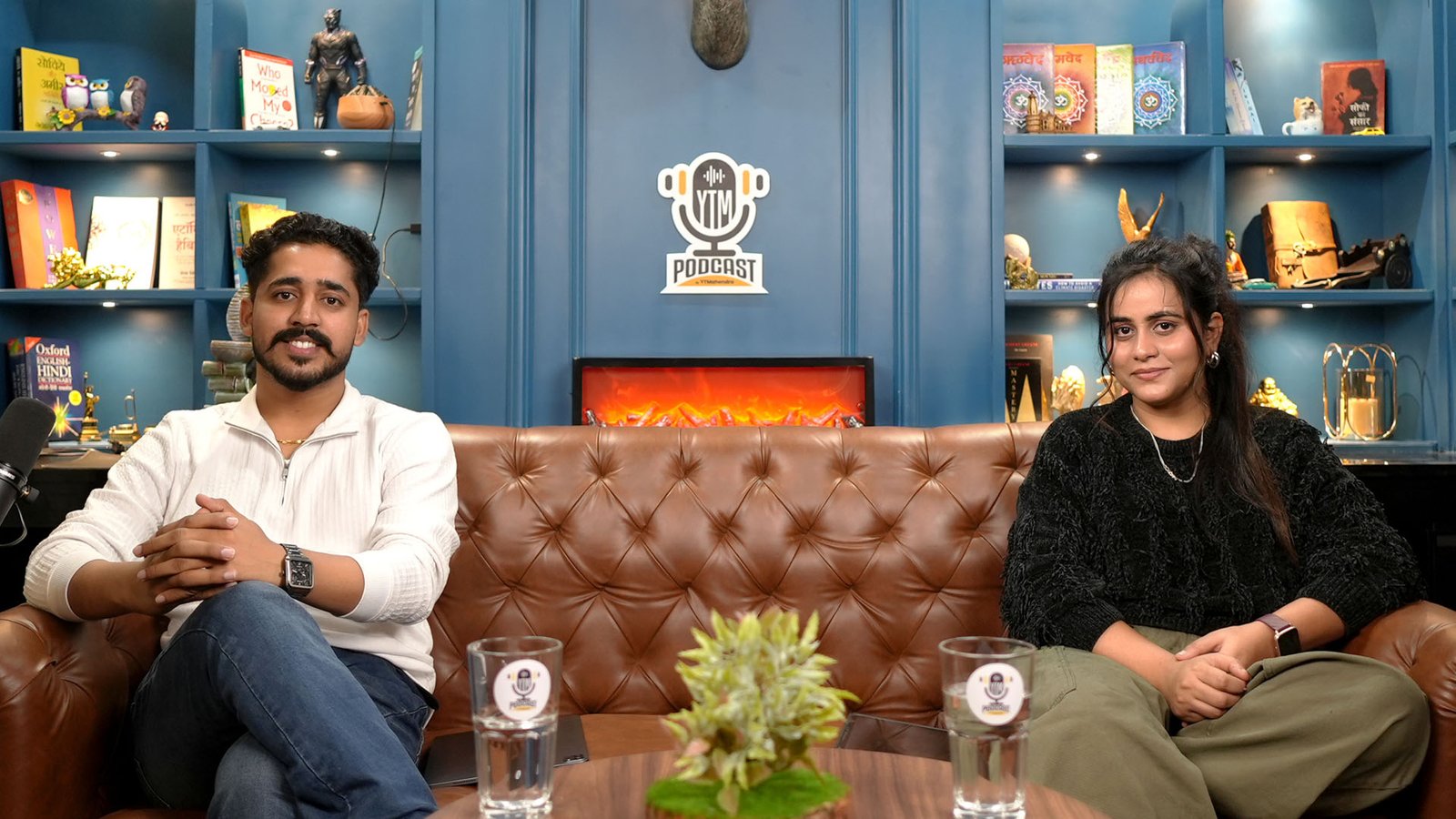
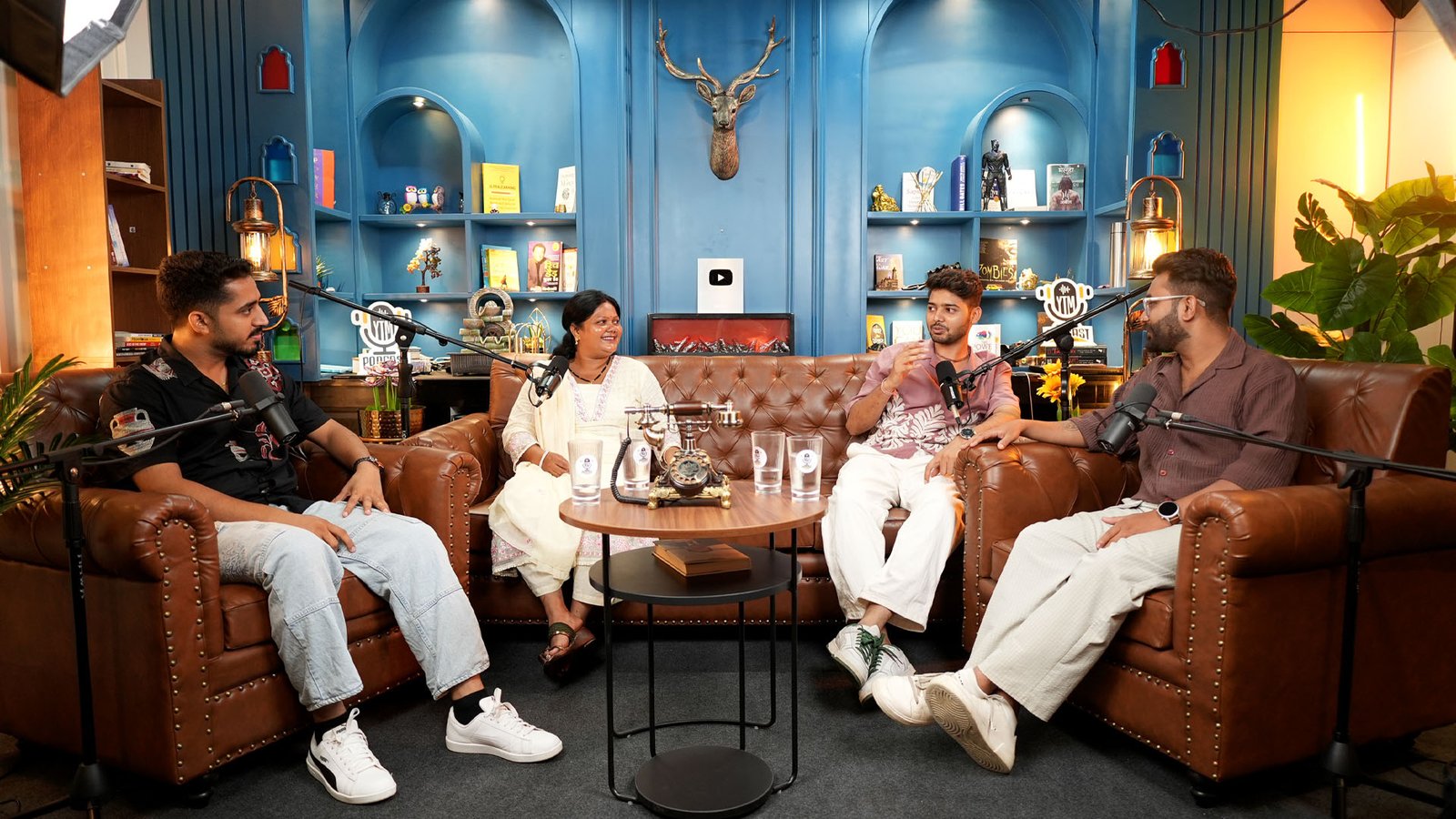
Our own show, YTMahendra Podcast, hosted by Mahendra Kumar, is recorded at Oskillo Studio. So the setup we recommend is the one we use ourselves.
Step 6: Plan and record your first episodes
Plan each episode with a short question flow, not a word-for-word script, and record three to five episodes before you publish the first. Shopify’s podcasting guide gives the same advice. A buffer of episodes takes the pressure off and keeps your schedule steady.
A simple episode plan
- Opening hook: one sentence on what the listener will get.
- Five to eight questions: start easy, go deeper in the middle, finish with a practical takeaway.
- Guest brief: send the topic and two or three sample questions a day before, so the guest arrives prepared.
- Closing line: where to follow, and what the next episode covers.
Recording tips that save editing time
- Do a 30-second test recording and listen on headphones before you start.
- Switch off phone notifications, fans and AC. Keep the mic a fist-width from your mouth.
- If you make a mistake, pause, repeat the sentence and carry on. The editor will cut it.
- Clap once at the start if you use separate audio and camera files. It makes syncing easy.
If you are renting a studio, batch recording saves money and effort. Book back-to-back hours, get two or three guests on the same day and change your shirt between episodes so each one feels fresh. Our suggestion is to plan roughly 90 minutes for a 60-minute episode, because setup, mic checks and a short break take time.
Step 7: Edit your podcast and make Reels and Shorts
Editing means cutting mistakes, balancing volume, reducing noise, adding an intro and outro, and exporting the full episode plus short clips. For video you also choose camera angles, correct colour and add captions. Plan for it: editing often takes longer than the recording itself.
If you edit yourself, Audacity and GarageBand are free options for audio. For video, use any editor you are comfortable with. The skill that matters more than the software is judgement: cut dead air, trim long tangents and keep the best 20 to 30 seconds of each topic for clips.
One recording, many pieces
A single 60-minute interview can become the full YouTube episode, an audio version for podcast apps, a highlight, three or four Reels or Shorts, and a thumbnail. That is how video shows grow beyond podcast apps. Keep captions on, because many people watch with sound off.
If you would rather hand editing over, these are Oskillo Studio’s editing rates. We also edit remotely for clients outside Jaipur.
| Edit | What you get | Price |
|---|---|---|
| Reel edit | Up to 1 minute plus cover | Rs 1,500 |
| Podcast edit | Up to 90 minutes | Rs 3,000 |
| Cinematic highlight edit | A short highlight of the episode | Rs 3,000 |
| Thumbnail | One thumbnail | Rs 500 |
| Complete Podcast Edit | Main edit, highlight, 3 reels with covers, 2 thumbnails | Rs 10,000 |
Step 8: Podcast hosting in India and publishing on Spotify, Apple and YouTube
A podcast host stores your audio and gives you an RSS feed, which you submit to Spotify, Apple Podcasts, JioSaavn and other apps. Video goes to YouTube separately. Spotify for Creators hosts for free, while hosts like Buzzsprout, Podbean and Acast are other common choices.
The AAFT guide to becoming a podcaster in India describes how these hosts work: audio sits with the host, and the RSS feed carries it to the directories. You upload once and every app picks up new episodes by itself.
| Platform | How to get listed | Good to know |
|---|---|---|
| Spotify | Host with Spotify for Creators, or submit your RSS feed | With Spotify for Creators, your RSS feed is created when you publish your first episode. |
| Apple Podcasts | Submit your RSS feed | Review usually completes within 10 business days. |
| JioSaavn | Register on YourCast and submit your RSS feed | Useful for reaching Indian listeners on a local app. |
| YouTube | Upload the video episode directly | Add chapters, a clear title and a strong thumbnail. |
How to start a podcast on YouTube in India
For a simple YouTube podcast setup, create or use a channel, upload your full video episode, and add a clear title, description, chapters and thumbnail. Then group episodes into a podcast playlist. Upload your Reels and Shorts separately, each pointing viewers to the full episode.
One practical point: publish with at least three episodes ready, a proper cover image and a short, clear show description. Use the same name and artwork everywhere so listeners can find you on every app.
Step 9: Grow your show and earn from podcasting in India
Growth comes from a fixed schedule, short clips on Reels and Shorts, good guests and listeners who share. Earning usually comes later, through sponsors, your own services or paid products. There is no reliable public rate card for Indian podcast sponsorships, so be careful with any promised per-episode price.
What actually helps a new show grow
- Stick to a day and time. Weekly is realistic for most people.
- Use guests who share. Send them the clips and ask them to post.
- Cut clips with one clear idea. A short clip that answers one question travels further than a long one.
- Ask for one action. A follow, a share or a comment, not five things at once.
- Look at your data. See where viewers drop off and fix your openings.
How do podcasters earn money in India?
Common routes are brand sponsorships, YouTube ad revenue, selling your own course or service, consulting, and live events. For many professionals, the real return is not ad income. It is trust. A CA, doctor, coach or business owner who explains things clearly on a podcast attracts clients. We would not plan a business on podcast income until you have a steady audience and a clear offer.
Podcast kaise shuru kare, podcast kaise banaye: Hinglish quick guide
Podcast shuru karne ke liye ek topic chuniye, ek achha mic lijiye, shant kamre mein record kariye aur 3 se 5 episodes ready rakhiye. Phir hosting platform par RSS feed banaiye aur Spotify, Apple, JioSaavn aur YouTube par publish kariye. Neeche seedhe steps hain.
- Topic aur language tay kariye. Hindi, English ya Hinglish, jo aap aaram se bol sakte hain. Ek khaas listener ke baare mein sochiye.
- Audio ya video decide kariye. Guests aur YouTube chahiye to video se shuru kariye.
- Budget banaiye. Mobile se podcast shuru karna ho to phone se test, ghar par mic setup, ya studio rental. Studio per hour hota hai, isliye pehle se plan kariye.
- Sound pe dhyan dijiye. Fan aur AC band kariye, curtain ya sofa wali jagah chuniye, headphones lagaiye.
- Question flow likhiye. Poora script nahi, bas 5 se 8 sawal.
- 3 se 5 episodes record kariye aur phir pehla episode publish kariye.
- Edit kariye aur Reels, Shorts aur thumbnail bhi banaiye.
- Host chuniye (Spotify for Creators free hai), RSS feed lijiye aur apps par submit kariye.
- Har hafte ek hi din episode daaliye. Regular rehna sabse zaroori hai.
Jaipur mein hain aur studio mein record karna chahte hain? Hamare saath seedha baat kariye: WhatsApp par message bhejiye ya contact page dekhiye. Common sawaalon ke jawab hamare FAQs mein bhi hain.
Podcast launch checklist
Use this checklist before you press publish. If every line is ticked, your show is ready to launch with a proper first impression: clear audio, a name and cover that match everywhere, a buffer of episodes and a plan for clips.
- One-line description of the show and the listener it is for.
- Language, format (solo, interview or panel) and audio or video decided.
- Budget set: phone, home setup or studio hours booked.
- Mic, headphones, light and camera tested in the room you will use.
- Fan, AC, phone notifications and street noise handled.
- Question flow written for each episode.
- Three to five episodes recorded.
- Episodes edited, with noise reduced and volume balanced.
- Cover art, thumbnails and captions ready.
- Podcast host chosen and RSS feed created.
- Show submitted to Spotify, Apple Podcasts and JioSaavn, allowing for Apple’s review time.
- Full video uploaded to YouTube, with Reels and Shorts scheduled.
- Publishing day and time fixed, and guests told to share.
Starting is the hard part, and once your first episode is live you will learn faster than any guide can teach you. If you want help with the room, the cameras or the editing, we are at Vaishali Nagar, Jaipur, every day from 10 AM to 8 PM.
Some product links on this page are Amazon affiliate links. As an Amazon Associate, YTMahendra Podcast earns from qualifying purchases, at no extra cost to you.
Frequently asked questions
How do I start a podcast in India for free?
Record on your phone in a quiet room, edit with free software like Audacity or GarageBand, and host on Spotify for Creators, which is free. Your RSS feed is created when you publish your first episode. Free works for testing an idea, but sound quality will limit growth.
How much does it cost to start a podcast in India?
A phone-only start can cost almost nothing. A home setup with a USB mic, headphones and stand roughly runs Rs 6,000 to Rs 20,000. Studio rental at Oskillo Studio in Jaipur starts at Rs 2,000 per hour for Economy Basic and goes up to Rs 8,000 per hour for Business Advance.
How do I start a podcast on YouTube in India?
Record a video episode with clear audio and good lighting, make a thumbnail, and upload it to your YouTube channel. Add a proper title, description and chapters. You can also publish the same episode as audio through an RSS host so it reaches Spotify and Apple Podcasts.
Do I need a studio to start a podcast?
No. You can start at home with a phone or a USB mic. A studio helps when you want video, a quiet treated room, multiple cameras, or guests who come in person. Many creators start at home and move to a studio for video episodes.
How can I start a podcast with just a phone?
Use wired earphones with a mic or a clip-on mic, record in a quiet, soft-furnished room, keep the phone still, and avoid calls or notifications during recording. Trim and clean the file in a free app, then upload it to a free host. Test one episode before committing.
How do I get my podcast on Spotify and Apple Podcasts from India?
Upload your episodes to a podcast host, copy the RSS feed, and submit it to Spotify, Apple Podcasts and JioSaavn YourCast. Apple’s review usually completes within about 10 business days. If you host with Spotify for Creators, your feed is created on first publish.
Podcast kaise shuru kare Hindi mein?
Pehle topic aur bhasha tay kijiye, phir audio ya video choose kijiye. Shant kamre mein achhe mic se 3-5 episodes record kijiye, edit kijiye, RSS host par upload kijiye aur Spotify, Apple Podcasts aur YouTube par publish kijiye. Har hafte ek fixed din par episode dalte rahiye.
Book your session at Oskillo Studio
Soundproof sets, 2 Sony 4K cameras, Shure mics and an on-site technician in Vaishali Nagar, Jaipur. Studio rent starts at Rs 2,000 per hour.
WhatsApp +91 96101 80066 | See all prices | 3rd Floor, VR Theme Park, Gandhi Path, Vaishali Nagar, Jaipur