
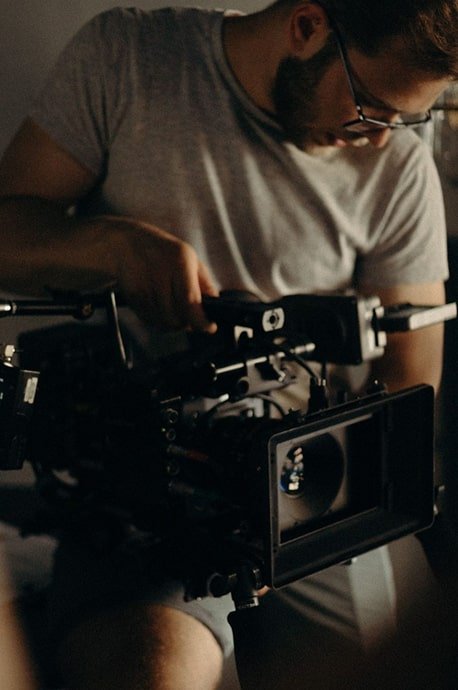

Recording is the fun part. Editing is where an episode becomes something people actually finish watching or listening to. If you are comparing podcast editing services in India, you probably want to know one thing: what happens to your files after you leave the studio? This post walks through our workflow at Oskillo Studio in Vaishali Nagar, Jaipur, from the moment the red light goes off to the final export.
Some of this is how we work. Some of it is simply good practice for podcast post production in India that any editor should follow, so it stays useful even if you never book with us.
Key takeaways
- Good editing starts before the edit: clean file handling, labelled tracks and an untouched original copy.
- Multicam video is synced to the audio, and the audio is the master track.
- Cleanup, levelling and loudness are three different jobs. Apple recommends about -16 LUFS for podcasts.
- Oskillo Studio charges ₹3,000 for a podcast edit up to 90 minutes and ₹10,000 for the Complete Podcast Edit.
- We also edit remotely for clients outside Jaipur.
What do podcast editing services in India actually include?
Podcast editing services in India usually include organising raw files, cutting the conversation, cleaning audio, balancing speaker levels, setting loudness and exporting. Video podcasts add camera switching, colour correction, captions and platform-ready exports. What is included varies, so always ask for the list in writing.
Nomono’s 2026 guide lists six steps for audio editing: organise raw files, clean up audio, cut content, balance speaker levels, set loudness, export and review. It also says a one-hour episode typically takes two to four hours to edit. Here is how those steps map to our post-production stage, the fourth step of our process after concept, pre-production and production.
| Editing step | What it means | Where it shows up at Oskillo |
|---|---|---|
| Organise files | Copy, name and back up raw video and audio | Before the edit begins |
| Cut content | Remove dead air, false starts, repeated takes | Main podcast edit |
| Clean and balance audio | Reduce noise, even out host and guest volume | Audio mastering |
| Picture | Camera switching and colour | Video edit and colour |
| Set loudness and export | Hit platform targets, then export | Platform exports |
| Extras | Captions, thumbnails, reels | Complete Podcast Edit |
If you want to ask about turnaround, revisions or file handover before booking, our FAQs are a good first stop.
What happens to the raw footage after the shoot ends?
Before anything is cut, the raw files are copied, named and stored safely. The original recording is never edited directly. This sounds boring, but a lost or overwritten file is the one mistake you cannot fix later, so we treat it as step one of every edit.
These are the habits we recommend to every creator, whether you edit with us or yourself:
- Copy first. Put the raw recording in a separate folder and never edit the original.
- Label by speaker and camera. A track called Host_Mic is easier to trust than Audio 3.
- Save in stages. Keep a rough cut, a cleanup version, a mix and a final export, so you can always go back a step if something goes wrong.
- Keep a second copy. One drive is not a backup.
- Name the episode clearly. Date, show name and episode number save hours later.
How do we sync a multicam podcast and cut the episode?
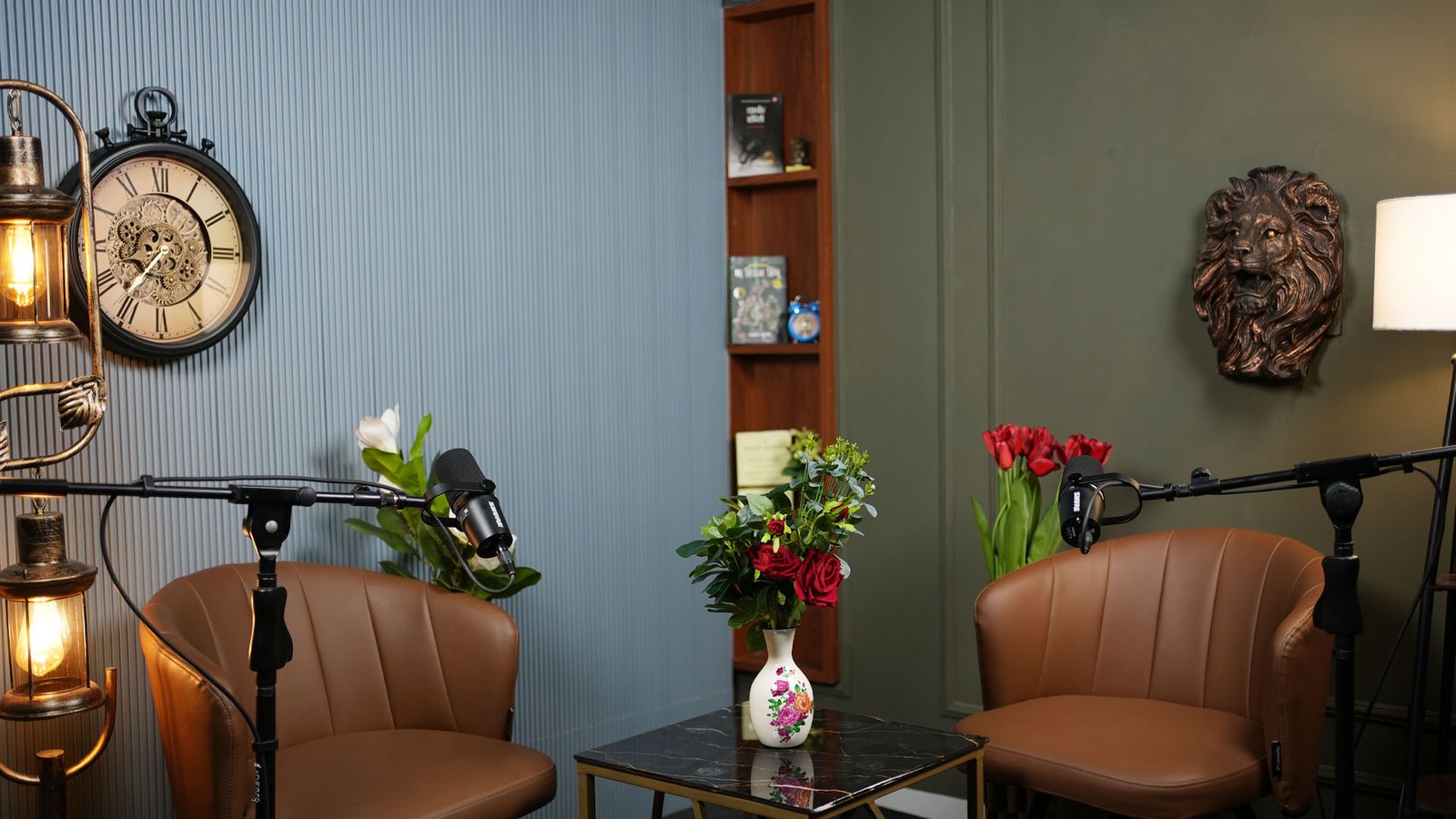
We line up every camera angle to the recorded audio, then cut the conversation into a clean, watchable episode. In our Advance packs, two Sony 4K cameras record alongside a Shure microphone and a pro audio recorder, so the audio track is the reference everything else follows.
Syncing sounds simple, but long recordings can drift, where picture slowly slips away from sound. The usual fix is to sync on the audio waveform and check the timeline near the beginning, middle and end before cutting.
Then comes the actual cut. Here is what typically goes and what stays:
- Goes: long silences, false starts, a question asked twice, a phone ringing, a pause while someone finds a note.
- Stays: the natural rhythm, the laughs, the thinking pauses that make a guest sound human.
- Needs a decision from you: sensitive remarks, unverified claims and anything the guest asked to keep off record.
Decide those off-record topics before the shoot, not after. It saves both of us a round of edits. You can note these topics on the contact page when you book.
How do we clean and master podcast audio?
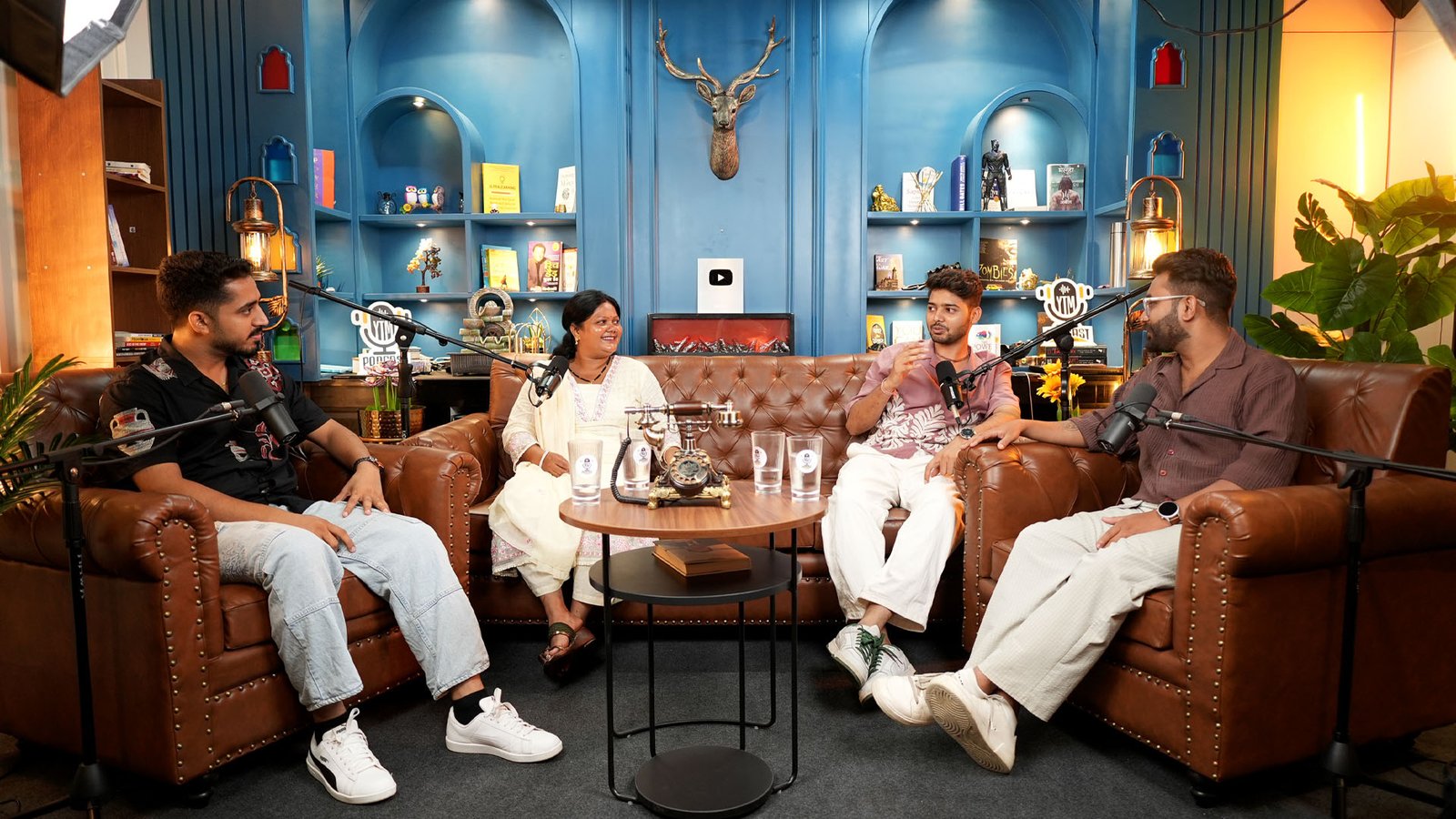
Podcast audio cleanup and mastering means removing noise, balancing host and guest volume, and setting the final loudness. These are separate jobs. Cleanup fixes problems, levelling makes voices match, and mastering makes the finished file play at the right volume on every platform.
Loudness is where creators get confused, because sources quote different numbers. Here is the honest picture:
- Apple Podcasts recommends -16 LUFS (±1 dB) with a true peak no higher than -1 dBTP.
- Spotify normalises playback to about -14 LUFS by default. That is a playback behaviour, not a podcast rule, and mastering louder only costs you dynamic range.
- Descript’s guide says -16 LUFS for stereo and -19 LUFS for mono is the usual standard.
The easiest way to remove background noise is to not record it. Our rooms are soundproof and acoustically treated, so there is far less fan hum, street noise and echo to fix in the edit. Software can reduce noise, but it can also make voices sound thin, so cleaner recording always beats heavier repair.
How do we turn one episode into a highlight, reels and thumbnails?
We cut the long episode first, then pull short pieces from it: a cinematic highlight, vertical reels with cover frames, and thumbnails. Podcast repurposing for reels and shorts means one recording can feed YouTube, Instagram and your audio feed, but each platform needs its own shape, length and first three seconds.
- Main episode: the full conversation, 16:9, with audio mastered as described above.
- Highlight: a cinematic edit of the strongest moments, useful as a trailer or a pinned video.
- Reels: vertical 9:16 clips of up to a minute, each with a cover and captions so they work on mute.
- Thumbnails: one clear face, a short line of text and strong contrast, since most people will see it small on a phone.
Pick reel moments that make sense without context: one opinion, one story, one surprising answer. With two Sony 4K cameras in our Advance packs, the editor has more than one angle, so a clip can be reframed for vertical without losing the speaker.

How does Hindi podcast editing differ from Hinglish podcast editing?
Hindi and Hinglish podcast editing differs mainly in how fillers are judged and how captions are written. Speakers switch between Hindi and English mid-sentence, so an editor must understand both languages to decide what is a filler and what is natural rhythm.
A few things we watch for:
- Fillers in Hindi: words like “matlab”, “toh” and “haan” can be filler or part of someone’s style. We trim repeats, not personality.
- Code-switching in captions: decide early whether captions use Devanagari or Roman script. Mixing both in one video looks careless.
- Names and terms: English brand names, medical or finance terms and Rajasthani words need a spelling check with you before export.
- Noise-reduction side effects: heavy cleanup can flatten softer Hindi consonants, so clean lightly and always check the result on both headphones and speakers.
If your guest speaks a regional dialect, tell your editor before the edit. It saves a round of corrections on captions.
What do podcast editing rates per episode in India look like (in ₹)?
Podcast editing rates in India vary widely because editors differ in skill, scope and turnaround. Fueler’s 2026 rate guide, a third-party estimate and not a fixed standard, puts freelance editing at about ₹500 to ₹10,000+ per finished episode depending on experience.
| Editor level (Fueler estimate) | Typical price per finished episode |
|---|---|
| Entry level | ₹500 to ₹1,500 |
| Mid level | ₹1,500 to ₹4,500 |
| Expert | ₹4,500 to ₹10,000+ |
The same Fueler guide quotes hourly freelance rates of roughly ₹1,000 to ₹3,500. A low price is not wrong, but check what it covers. For video podcast editing in India, the price depends on audio only versus video, how many revisions you get, and whether captions and reels are extra.
Also check whether editing is bundled with recording. In India, editing is not always included in studio rental, and some studios charge it separately. Confirm it before you book.
At Oskillo: what the Complete Podcast Edit gives you
The Complete Podcast Edit at Oskillo Studio in Vaishali Nagar, Jaipur costs ₹10,000. It includes the main episode edit, one cinematic highlight, three reels with covers and two thumbnails, so one recording becomes a full set of publish-ready content.
| Item | Priced separately |
|---|---|
| Podcast edit (up to 90 minutes) | ₹3,000 |
| Cinematic highlight edit | ₹3,000 |
| 3 reels with covers (up to 1 minute each) | ₹4,500 (₹1,500 each) |
| 2 thumbnails | ₹1,000 (₹500 each) |
| Complete Podcast Edit | ₹10,000 |
Bought one by one, these come to ₹11,500, so the bundle saves ₹1,500. If you only need one piece, a reel edit is ₹1,500 and a thumbnail is ₹500.
If you are looking for a podcast editor in Jaipur, or a podcast studio in Jaipur that also edits, you can rent the studio with or without editing. Clients outside Jaipur can send files and we edit remotely. Our post-production covers the edit, colour, audio mastering, thumbnails, captions, reels and platform exports. See current studio hours and packs on the pricing page.
What should you check before hiring any podcast editor?
Before hiring any podcast editor, check what is included, how many revisions you get, how feedback is shared, who owns the files and how your raw footage is stored. Ask for these answers in writing so there are no surprises after the first draft.
- Scope: audio only, or video, captions, reels and thumbnails too?
- Turnaround: how long from file handover to first draft, and for the final?
- Revisions: how many rounds, and are timestamped notes in a shared doc accepted?
- Loudness target: will the editor deliver near -16 LUFS for podcast feeds, and tell you why?
- File safety: is the original kept untouched, and how long is it archived?
- What you get back: final exports only, or project files and raw tracks too?
- Language skills: can they handle Hindi, Hinglish or Rajasthani speech and captions?
- Sensitive content: who approves cuts, and how do guests sign off?
Ask for a short sample edit before committing to a full series. If you want to talk through your episode, message us on WhatsApp and we will guide you.
Frequently asked questions
How much do podcast editing services cost in India?
Rates vary widely. Fueler’s 2026 guide, a third-party estimate, puts freelance editing at about ₹500 to ₹10,000+ per episode depending on experience. At Oskillo Studio in Jaipur, a podcast edit up to 90 minutes costs ₹3,000, and the Complete Podcast Edit is ₹10,000.
How long does it take to edit a one-hour podcast?
Nomono’s 2026 guide says a one-hour episode typically takes two to four hours of hands-on editing in a DAW. Video podcasts take longer because of camera switching, colour and exports. Ask any editor for a delivery date before you pay.
What LUFS should a podcast be mastered to?
Apple Podcasts recommends -16 LUFS (±1 dB) with true peak no higher than -1 dBTP. Spotify normalises playback to about -14 LUFS, and some guides suggest -19 LUFS for mono. For most shows, mastering near -16 LUFS is a safe target.
Is podcast editing included in studio rental in India?
Not always. Many studios charge editing separately, so confirm before booking. At Oskillo Studio, you can rent the studio with or without editing. Our Advance packs include cameras, microphones and a technician, while editing is priced separately per episode.
Do you edit podcasts for clients outside Jaipur?
Yes. We offer remote podcast editing for clients outside Jaipur. You share your raw files, tell us what you want delivered, and we handle the edit, audio mastering and exports. You can message us on WhatsApp at +91 96101 80066 to start.
What is the difference between podcast editing, mixing and mastering?
Editing is cutting content: removing mistakes, silences and repeated takes. Mixing balances voices, music and levels. Mastering sets the final loudness and polish so the file plays consistently on every platform. A full podcast edit usually covers all three.
Podcast edit karwane ke liye kaunsi files deni hoti hain?
Aapko raw video files, raw audio tracks, episode ka naam, guest ki details aur jo cheezein cut karni hain unki list deni chahiye. Agar aapne Oskillo mein record kiya hai, toh files hamare paas pehle se hoti hain, aur aap bas brief share karte hain.
Book your session at Oskillo Studio
Soundproof sets, 2 Sony 4K cameras, Shure mics and an on-site technician in Vaishali Nagar, Jaipur. Studio rent starts at Rs 2,000 per hour.
WhatsApp +91 96101 80066 | See all prices | 3rd Floor, VR Theme Park, Gandhi Path, Vaishali Nagar, Jaipur